
ICA Africa Highlights Morocco’s Leadership at the National Closing Ceremony of IYC 2025
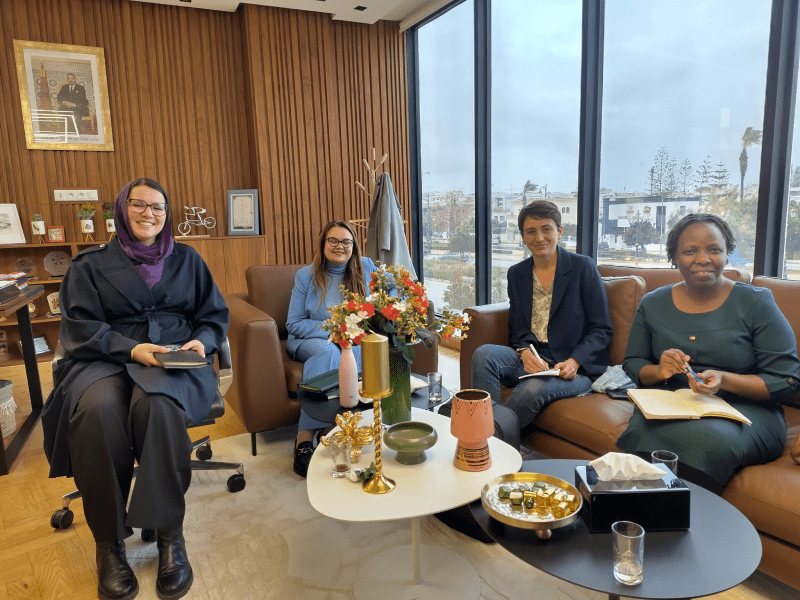
Right to Left, Dr. Rose Karimi (RD, ICA Africa), Mme Francesca Zaganelli (CICOPA), Mme Aicha Errifaai (DG, ODCO) and Ms. Sabra (ODCO)
The national closing ceremony of the United Nations International Year of Cooperatives (IYC 2025), held on 28 January 2026 in Rabat, brought together policymakers, cooperative leaders, development partners, and social economy actors to celebrate a year that positioned cooperatives at the heart of inclusive and sustainable development. Under the theme “And now, it’s the cooperatives’ turn – From vision to impact,” the event marked not only the conclusion of a global celebration, but the beginning of renewed national and international commitment to the cooperative movement.
The programme reflected this forward-looking ambition. The ceremony opened with remarks by Mr. Lahcen ES-SAADY, Secretary of State in charge of Handicrafts and the Social and Solidarity Economy. The International Cooperative Alliance (ICA) message was delivered by Mr. Santosh Kumar, ICA Legislation Director, on behalf of Dr. Rose Karimi Kiwanuka, Regional Director of ICA Africa, and Mr. Jeroen Douglas, Director General of the ICA. The message reaffirmed global recognition of Morocco’s leadership during IYC 2025 and its active role within the ICA network.
In her institutional keynote, Mrs. Aicha ERRIFAI, Director General of ODCO, illustrated how Morocco translated international vision into measurable national impact through structured programmes, territorial mobilization, and institutional innovation. Two roundtables followed: one featuring Social and Solidarity Economy stakeholders discussing partnerships and achievements, and another providing cooperative leaders with the opportunity to share testimonies, ambitions, and perspectives for the future. The signing of partnership agreements during the ceremony symbolized the transition from dialogue to concrete action.
Figures presented during the event demonstrated the impressive scale of Morocco’s cooperative sector. The country counts more than 65,000 cooperatives with nearly 789,000 members, including 272,000 women and 18,000 youth. These cooperatives generate or sustain over 120,000 jobs, while the leading 333 cooperatives account for more than 14 billion MAD in annual turnover.
Public awareness and capacity-building were central to Morocco’s approach during IYC 2025. Nearly 600 awareness sessions were conducted nationwide, reaching almost 15,000 beneficiaries, the majority of whom were women and young people. Cooperatives also gained unprecedented visibility through national and regional fairs, itinerant markets, and participation in major events such as the International Agricultural Fair, where 500 cooperatives were showcased as contributors to food sovereignty.
A key highlight of the ceremony was the introduction of Morocco’s participation in the ICA Cooperative Cultural Heritage Programme. Moroccan women’s argan oil cooperatives were presented as emblematic examples of how traditional knowledge, environmental stewardship, and women’s empowerment converge within the cooperative model. Their inclusion among selected initiatives across 25 countries recognized cooperatives as living expressions of cultural heritage and community identity.These cooperatives are not only recognized by the ICA as living expressions of cultural heritage across 25 countries, but are also inscribed under UNESCO’s Intangible Cultural Heritage (ICH) for the argan practices and ecosystem. This global recognition was further reinforced by the United Nations General Assembly resolution proclaiming 10 May as the UN International Day of Argania, acknowledging the cultural, ecological, and socio-economic importance of the argan tree and the communities, particularly women’s cooperatives, who safeguard this heritage.
These realities were made tangible through field visits to cooperatives on the margins of the ceremony. Participants visited Coopérative Yacout in Salé, a cooperative specializing in Moroccan terroir products, where members transform local agricultural produce into value-added goods while preserving artisanal know-how and ensuring quality standards. The visit illustrated how cooperatives connect local production to markets while maintaining strong community roots. A second visit took place at the Help Gluten Free Cooperative, also based in Salé, which produces gluten-free food products such as rice semolina. This innovative cooperative responds to emerging health and dietary needs while creating inclusive employment opportunities, demonstrating how Moroccan cooperatives adapt traditional processing knowledge to modern consumer demands and niche markets.
The event also recalled the strategic outcomes of the 5th Assises of the Social and Solidarity Economy held in Benguerir, which produced recommendations to modernize the legal framework, strengthen governance, promote digital transition, and reinforce regional structuring of the sector.
Youth inclusion featured prominently through initiatives such as the “Génération Solidaire” programme and the “Motatawi3” initiative, which has supported over 4,000 young beneficiaries in developing entrepreneurial capacities. In parallel, ODCO announced an integrated support ecosystem comprising a Cooperative Project Bank, the Taawouniya Academy for training, and a Coop Marketplace to enhance market access for cooperatives.
The key message echoed throughout the ceremony was clear: IYC 2025 is not an endpoint, but a starting point on the road toward IYC 2035. Morocco’s experience demonstrated how national ambition, grassroots engagement, and institutional support can transform the cooperative model into a durable lever for inclusive development.
On the margins of the ceremony, meaningful exchanges took place between the Director General of ODCO, the Regional Director of ICA Africa, the Membership Coordinator of CICOPA, and the ICA Legislation Director. These discussions focused on short- and medium-term priorities, including the participation of Moroccan cooperatives in CICOPA in collaboration with ICA Africa, and the promotion of the African Union Model Law on Cooperatives through, among other initiatives, the creation of an international intergovernmental platform for exchange on enabling environments for cooperatives.
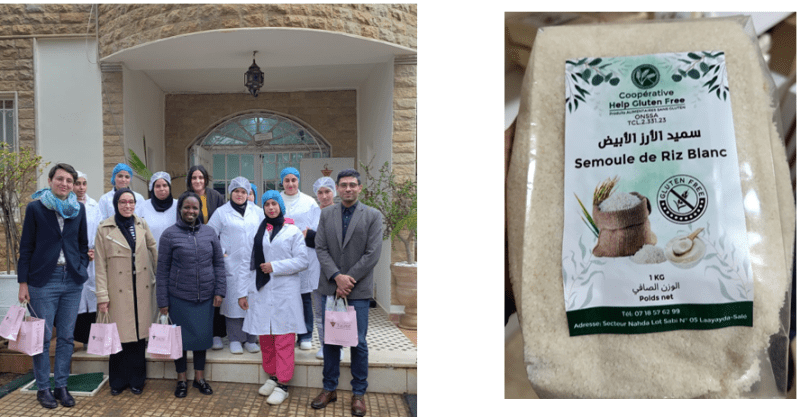
Dr. Rose Karimi, RD ICA Africa with representatives of Yacout Cooperative. Seen also are ICA Director of Legislation and CICOPA Membership Coordinator where they explored the typology of the cooperative and of course contributed to the cooperative by purchasing authentic and cooperatively made Argan oil. Image on the right is of gluten free semolina produced by the Help Gluten Free Cooperative – a one of a kind not just in Morocco, but perhaps in the world!